
Imagine you’re the CEO of a successful company in charge of protecting plenty of sensitive data. Your network is vital to your business, but it’s also a tempting target for cybercriminals lurking in the shadows. The blue team, known as cybersecurity’s hidden heroes, who protects your company from malicious entities.
Blue teams in cybersecurity are like fortress guardians tasked with protecting your organization’s digital assets from unrelenting attacks. They are responsible for maintaining the safety of your systems, identifying and mitigating risks, and ensuring the efficient functioning of your organization without any interruptions.
But what exactly is the role of a blue team? And how do they keep your company safe? Let’s go into the realm of blue teams to learn the secrets behind their unwavering commitment to cybersecurity.
What is a Blue Team?
A “blue team” is a group of cybersecurity professionals who defend an organization’s networks, systems, and data from cyberattacks. They serve as an organization’s defensive cybersecurity posture, working hard to identify and neutralize threats, reduce risks, and protect the overall security of the organization’s digital infrastructure.
The Blue Team’s Role in Cybersecurity
The blue team’s duties include a wide range of activities, such as:
- Vulnerability Management: Identifying and fixing software, systems, and network vulnerabilities to reduce the attack surface.
- Threat Detection and Analysis: Monitoring networks and systems for unusual behavior and analyzing logs and data to detect potential risks.
- Incident Response: Creating and implementing plans to respond to cybersecurity incidents, contain damage, and restore regular operations.
- Security Awareness and Training: Employee education on cybersecurity risks and best practices to reduce human error, a primary cause of data breaches.
- Security Patching and Updates: Implement security updates and patches as soon as possible to fix found vulnerabilities.
The Blue Team’s Arsenal of Tools
Blue teams use a range of technologies and strategies to combat cyberattacks, including:
- Security Information and Event Management (SIEM) Systems: Platforms that collect and analyze logs and data from numerous sources to detect anomalies and potential threats.
- Network Security Tools: Firewalls, intrusion detection and prevention systems (IDS/IPS), and network traffic analyzers monitor and filter network traffic to detect and prevent unwanted behavior.
- Endpoint Security Solutions: To safeguard individual devices and stop data leaks, endpoints are equipped with antivirus, anti-malware, and data loss prevention (DLP) software.
- Vulnerability Scanning Tools: Scanners that detect and evaluate software, systems, and network vulnerabilities.
- Penetration Testing: Authorized testers execute simulated attacks to find and exploit holes in the organization’s defenses.
The Blue Team’s Collaboration with Other Departments
The blue team must work in other organizational areas to achieve effective cybersecurity. It comprises:
- IT Operations: Cooperating with IT operations to guarantee efficient implementation and upkeep of security controls.
- Risk management: Working with risk management groups to identify, evaluate, and rank cybersecurity threats.
- Legal and Compliance: Worked with teams in charge of legal and compliance to ensure that rules governing data protection and incident reporting were followed.
- Executive Leadership: Keeping the executive leadership informed about cybersecurity incidents and threats frequently.
The Future of Blue Team Cybersecurity
The importance of the blue team will grow as cyber threats continue to advance in sophistication and intricacy. Blue teams must constantly innovate and adapt using new tools, techniques, and strategies to stay ahead of the curve and safeguard enterprises from unknown risks.
Frequently Asked Questions (FAQ’s)
What is the objective of a blue team?
A blue team’s primary objective is to protect an organization’s systems from cyberattacks. This includes a range of activities, such as:
- Using vulnerability scanning, penetration testing, and threat intelligence to find weaknesses and make the system more secure.
- Security controls and mitigation methods are being implemented to address vulnerabilities and mitigate risk.
- Security incidents can be tracked and identified using security information, event management (SIEM) tools, and other monitoring systems.
- Responding to security incidents by containing the breach, researching the reason, and putting recovery plans in place.
- Working with other teams inside the organization, such as the red and incident response teams, to improve overall security posture.
What is the job description of a blue team?
A blue team member’s job description will differ depending on their role and the organization’s size.
However, some of the more common tasks are as follows:
- Security analysts assess vulnerability, monitor security logs, and investigate unusual activities.
- Incident responders are assigned to containing and resolving security issues, collecting evidence, and determining fundamental causes.
- Security engineers: hold responsibility for designing, implementing, and maintaining security controls and infrastructure.
- Threat hunters: Use innovative approaches to seek for threats and weaknesses.
What is an example of a blue team?
A blue team may consist of an entire IT department or just a smaller group of people whose responsibilities include security. External consultants or managed security service providers (MSSPs) can supplement or completely replace an internal blue team.
What is the blue team strategy?
A multi-layered approach to security is often part of the blue team plan, including:
- Multiple layers of security controls are implemented to make it more difficult for attackers to enter the system.
- Proactive defense entails detecting and correcting vulnerabilities before they are exploited.
- Threat intelligence is knowledge about the most recent threats and attack strategies.
- Incident response: Having a clear plan for dealing with security incidents.
Is threat intelligence considered a blue team?
While threat intelligence is essential for blue team operations, it is not considered an isolated blue team activity. Threat intelligence gives necessary details to the blue team, allowing them to prioritize their efforts and design successful security plans.
Is threat intelligence a blue team?
Blue teams rely on cyber threat intelligence (CTI). CTI gives the blue team information about adversary tactics, methods, and procedures (TTPs), allowing them to anticipate and defend against possible attacks.
Is blue team stressful?
A blue team member’s job might be tough and stressful. They are in charge of safeguarding an organization’s essential assets and must always be on the lookout for any dangers. The joy of effectively fighting against attacks and securing sensitive information, on the other hand, can be extremely fulfilling.
What is the difference between red and blue cyber security?
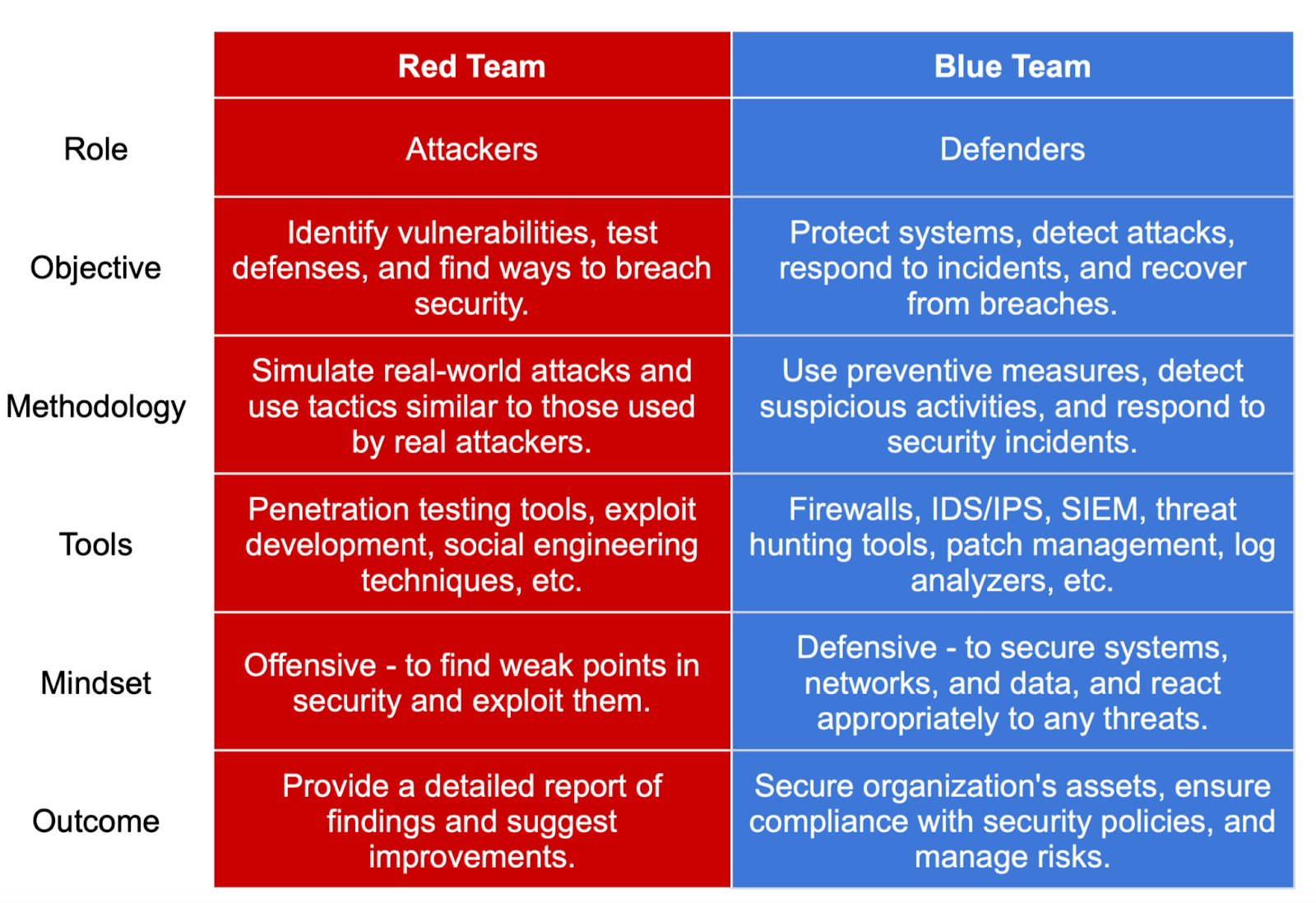
In cybersecurity, red and blue teams play opposing roles. The red team simulates attackers who try to penetrate the organization’s defenses and identify weaknesses. On the other hand, the blue team fights against these threats and seeks to strengthen the company’s security posture.
Understanding a blue team’s objectives, strategies, and everyday actions can help you appreciate their vital role in protecting the digital world.
The Blue Team – A Bastion of Cybersecurity
The blue team is a ray of hope in the constantly changing world of cybersecurity, a line of defense against the never-ending barrage of cyberattacks. They are invaluable allies in the digital sphere due to their unwavering dedication to security, their grasp of intricate technology, and their capacity to adjust to constantly evolving dangers.
When navigating the intricacies of cybersecurity, remember your digital fortress’s protectors, the blue team. The foundation of your company’s security posture is its knowledge and commitment.
I invite you to visit our blog to learn more about cybersecurity and the world of blue teams.
Leave a Reply